There are specific traits many people think about when they call something photogenic, and they are all wrong, especially for nonhuman animals. Pepper has taken to being more photogenic with each picture I take of her, and it's because she is losing the shyness she had when she first arrived.
For those who don't know, or don't have the time to read back through this blog, Pepper was really depressed when she first arrived because of being rejected twice and neglected. So taking photos of her was bit and miss, the best ones were when she slept, or was unaware of the camera being pointed at her.
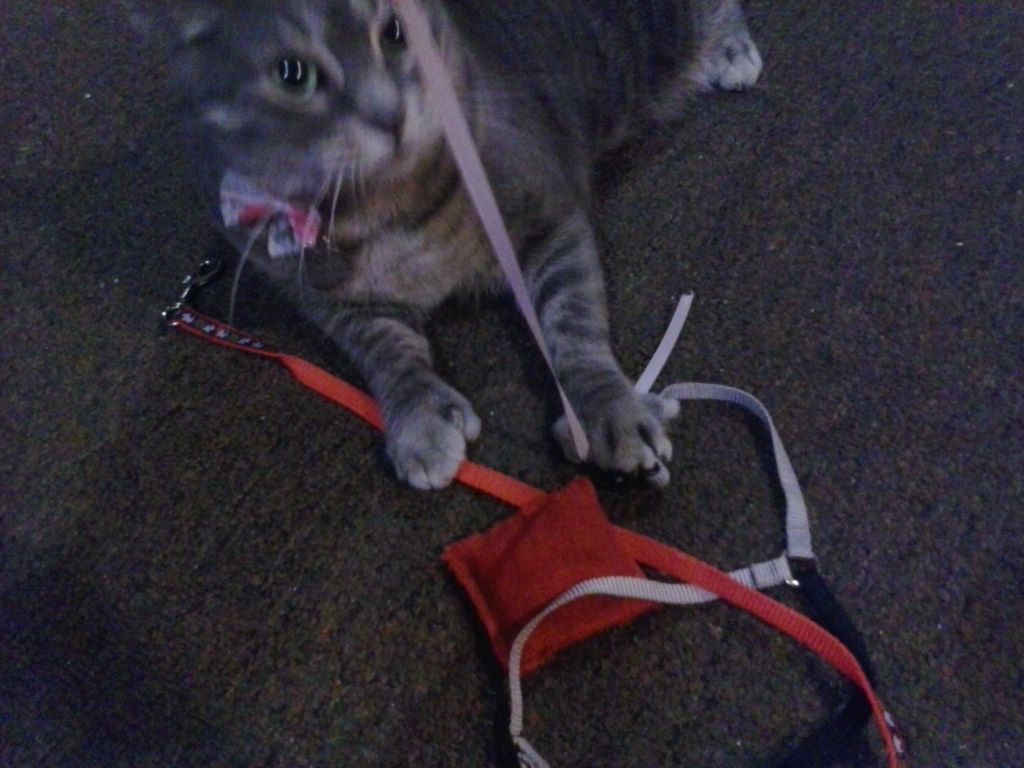
But now she poses, looks at the camera when she's not busy, even smiling for the photo sometimes. She has come to enjoy it. All animals are photogenic, the photographer is responsible for bringing out the beauty in them.
Pepper is no exception, and she is not a particularly exceptional looking cat, though her fur is so soft and luxurious it's impossible to resist petting her. What makes our companions so wonderful in photographs is the bond between the human taking the photo and the other animal, you can tell when someone they know is behind the camera or not because they will ham it up for the human they know better.
Wildlife photographers are not interested in the animals putting on a show, we love their photos for capturing the beauty of nature as it is, so this does not apply to them. I do envy wildlife photographers though.
The trick to taking great photos of your companions is to regard them as you do your human friends. Act casual and natural, take the shots as they come, and don't worry if they are not perfect. That last part is important, because the images will always be perfect for the viewer, so stop worrying about the color or breed of the animal, or even if they look at the camera.
Most of our nonhuman companions are becoming very familiar with the idea of being photographed, to them it's just an easy way to make us happy. For us it's a way to keep them alive forever and remind everyone of how awesome your friendship was.
To those who have this stupid idea that black cats "make horrible selfies," stop being selfish. Black cats are no less photogenic than a Persian. This is nothing more than some vicious rumor started by some idiots who probably think seeing a black cat online is bad luck, stop giving superstition and ignorance validation.
So I propose a world wide black cat photo storm, lost pics of your black cats everywhere, thousands of pictures, old and new. Keep doing this every day until this stupid notion dies, so fewer cats have to.
Showing posts with label language. Show all posts
Thursday, August 7, 2014
Tuesday, July 29, 2014
New Friends
A dog spent about three hours with us today, her name is Caramel. I was watching her for a neighbor while he had to go to an appointment. Based on my experience, people tend to be too pushy and expect nonhuman animals to make friends and get along much too fast, you really have to let them go at their own pace.
Caramel is very cat friendly, she even seems to understand them well. Pepper is not yet stranger friendly, but shows no difference between cat or dog. So I let Pepper observe from her perches, where she feels safest. Eventually she figured out that Caramel could not get onto the counter or windowsill and just watched from there.
Pepper won't claw anything, she hasn't even used her claws to defend herself yet, so I knew Caramel would be safe. When Caramel did have a chance to get near Pepper, my girl took a defensive posture, which is really just a glare with ears back, at the approaching stranger. Caramel sniffed for just a bit then backed away to explore more of the apartment.
That was it. Caramel is willing to be friends but also seems to know to give Pepper her space until she'd ready. I was in control of the situation, though I was allowing it to play out on it's own I could step in before either got hurt if one of them showed any aggressive behavior. That is the key to introduction, let them decide the speed.
Eventually the two will become friends or indifferent. Indifference must be acceptable, you cannot force friendships, but indifference can later become a friendship if they are not pushed together. Younger nonhuman animals tend to become friends much faster, and if they have only positive encounters with strangers the younger ones will be very friendly.
Older nonhuman animals tend to take a lot more time and patience if they have either had a lot of bad experiences, or no experiences to learn from. Pepper is the latter, she doesn't fear nonhuman animals at all, but has no idea what to think about them because her only exposure to strangers was at the shelter where it was a gambit if behaviors.
There is a chance an adult cat will always be a loner, they won't like any strange nonhuman animals, ever. These are also the ones quick to growl or scratch your hand if you ever pet another animal. So it is advisable to pet another nonhuman animal first, get their smell on your hand, then allow your friend to smell your hand.
How they react to this will tell you if they are capable of making friends. For Pepper it was curiosity and indifference, so I knew what to expect their first long encounter. This was why I did not mind watching Caramel at all, Pepper knew Caramel existed before meeting her and I knew Pepper's reaction as well.
All in all, it was a great experience for all of us, Caramel finally got to hang out with me, she has always been excited to see me in the lobby. Pepper got to watch and see what Caramel was about. I got to see enough Pepper's reactions to know her pace for future introductions.
In a few months I may be watching Caramel for a few days, it is possible they become best friends, based on their reactions to each other. Caramel has been around cats all her life, very positive experiences, which is why she understands them so well.
Caramel is very cat friendly, she even seems to understand them well. Pepper is not yet stranger friendly, but shows no difference between cat or dog. So I let Pepper observe from her perches, where she feels safest. Eventually she figured out that Caramel could not get onto the counter or windowsill and just watched from there.
Pepper won't claw anything, she hasn't even used her claws to defend herself yet, so I knew Caramel would be safe. When Caramel did have a chance to get near Pepper, my girl took a defensive posture, which is really just a glare with ears back, at the approaching stranger. Caramel sniffed for just a bit then backed away to explore more of the apartment.
That was it. Caramel is willing to be friends but also seems to know to give Pepper her space until she'd ready. I was in control of the situation, though I was allowing it to play out on it's own I could step in before either got hurt if one of them showed any aggressive behavior. That is the key to introduction, let them decide the speed.
Eventually the two will become friends or indifferent. Indifference must be acceptable, you cannot force friendships, but indifference can later become a friendship if they are not pushed together. Younger nonhuman animals tend to become friends much faster, and if they have only positive encounters with strangers the younger ones will be very friendly.
Older nonhuman animals tend to take a lot more time and patience if they have either had a lot of bad experiences, or no experiences to learn from. Pepper is the latter, she doesn't fear nonhuman animals at all, but has no idea what to think about them because her only exposure to strangers was at the shelter where it was a gambit if behaviors.
There is a chance an adult cat will always be a loner, they won't like any strange nonhuman animals, ever. These are also the ones quick to growl or scratch your hand if you ever pet another animal. So it is advisable to pet another nonhuman animal first, get their smell on your hand, then allow your friend to smell your hand.
How they react to this will tell you if they are capable of making friends. For Pepper it was curiosity and indifference, so I knew what to expect their first long encounter. This was why I did not mind watching Caramel at all, Pepper knew Caramel existed before meeting her and I knew Pepper's reaction as well.
All in all, it was a great experience for all of us, Caramel finally got to hang out with me, she has always been excited to see me in the lobby. Pepper got to watch and see what Caramel was about. I got to see enough Pepper's reactions to know her pace for future introductions.
In a few months I may be watching Caramel for a few days, it is possible they become best friends, based on their reactions to each other. Caramel has been around cats all her life, very positive experiences, which is why she understands them so well.
Labels:
adoption,
behavior,
best friend,
cat,
companion,
dachshund,
dog,
family,
feline,
introductions,
language,
personality,
pet
Friday, July 25, 2014
Kitty Language and Personality
One common misconception about cats is that they are independent. The reality is that they are very expressive. The problem is that most people don't recognize their expressions, which are a form of language they use to communicate to us.
This pseudo language develops based on their environment and living situation, with a few cues that are almost standard. One example is the tail twitch, where they wag the lower half of their tail quickly from side to side, often signifying annoyance or anger. Pepper uses it to show she wants or needs something.
The wide wag is a sign of happiness or playfulness, combined with other cues to make the meaning more clear, such as pointed up or down. This one is almost universal, I have seen no cats use this cue for anything else yet. Even Pepper seems incapable of keeping her tail still when she's happy or playful.
Essentially, the human companion will learn these when they spend time with the cat, it's simply a matter of paying attention. However, when we do not try to recognize these, the cat will think we're ignoring them and pay us in kind, by ignoring what we tell them. Though they can live on their own, we engineered them to depend on us for affection and attention, they crave it.
So now we have the other side, how do we communicate with the cat? They communicate with body language and tone, it's also what they understand best. The tone in your voice is one of those nearly always understood forms of communication, almost all mammals will use the same tones for the same meanings.
So to ensure they understand you best, make sure your tone and body language demonstrate your meaning. Felines have almost no interest in learning the complex vocals we use for language, to them it tells little about what is meant. So when they are good use happy tones and body language.
When they do something wrong there is rarely a reason to punish them, and never a reason to strike them even a little bit. To a cat there is no "gentle tap" when they are being punished, and they will resent being struck and only act up more. We do have a tone they understand very well, they use it for their kittens all the time.
To let a cat know that they are doing something wrong or dangerous, use concern. Think of them as a human child and tell them gently, firmly, and with only a slight emphasis, not to do it. Watch them, make eye contact if you can, and don't pet them when saying it. The loss of attention is another useful method for a few behaviors.
The loss of attention or affection should only last during the negative behavior, then resume once they stop, they figure it our very quickly for a few common problems. The first is the kneading, when they are under the bliss of pets, they often use their claws without thinking about it during the kneading response. Simply stop petting them until they withdraw their claws.
They will test it for a bit first, trying just the claws, longer or shorter push/pull motions, and eventually without the claws. Cats are pretty smart, they can figure out the difference in such occasions. Another instance is during play, they sometimes bite or claw without realizing it hurts us.
Wrestling with the cat can be fun, and entertaining, using just your hand they roll onto their back and play fight. But their claws hurt, so most people don't do it much. This wrestling is a lot of fun for the cat though, so they may even resent you not entertaining them. So, do the hand wrestling, then when their teeth or claws hurt you just stop, don't pull away, don't get angry, don't reprimand them at all.
Just freeze your hand in that position and look at them without an expression, or show pain in your eyes. Once they release enough that it no longer hurts, play some more. Like with kneading, they quickly figure out why you stop.
The above will likely counter everything you have read in the books you buy, remember, they are trying to sell books, not help you and your best friend get along. If you have tried other methods, it may take a while for the cat to stop being angry before this one will work again, patience is what a cat's friend needs most, but don't return to the old methods or it will take longer for the feline to trust you again.
I hope you and your feline friends all the best, and Pepper says "mrreow."
This pseudo language develops based on their environment and living situation, with a few cues that are almost standard. One example is the tail twitch, where they wag the lower half of their tail quickly from side to side, often signifying annoyance or anger. Pepper uses it to show she wants or needs something.
The wide wag is a sign of happiness or playfulness, combined with other cues to make the meaning more clear, such as pointed up or down. This one is almost universal, I have seen no cats use this cue for anything else yet. Even Pepper seems incapable of keeping her tail still when she's happy or playful.
Essentially, the human companion will learn these when they spend time with the cat, it's simply a matter of paying attention. However, when we do not try to recognize these, the cat will think we're ignoring them and pay us in kind, by ignoring what we tell them. Though they can live on their own, we engineered them to depend on us for affection and attention, they crave it.
So now we have the other side, how do we communicate with the cat? They communicate with body language and tone, it's also what they understand best. The tone in your voice is one of those nearly always understood forms of communication, almost all mammals will use the same tones for the same meanings.
So to ensure they understand you best, make sure your tone and body language demonstrate your meaning. Felines have almost no interest in learning the complex vocals we use for language, to them it tells little about what is meant. So when they are good use happy tones and body language.
When they do something wrong there is rarely a reason to punish them, and never a reason to strike them even a little bit. To a cat there is no "gentle tap" when they are being punished, and they will resent being struck and only act up more. We do have a tone they understand very well, they use it for their kittens all the time.
To let a cat know that they are doing something wrong or dangerous, use concern. Think of them as a human child and tell them gently, firmly, and with only a slight emphasis, not to do it. Watch them, make eye contact if you can, and don't pet them when saying it. The loss of attention is another useful method for a few behaviors.
The loss of attention or affection should only last during the negative behavior, then resume once they stop, they figure it our very quickly for a few common problems. The first is the kneading, when they are under the bliss of pets, they often use their claws without thinking about it during the kneading response. Simply stop petting them until they withdraw their claws.
They will test it for a bit first, trying just the claws, longer or shorter push/pull motions, and eventually without the claws. Cats are pretty smart, they can figure out the difference in such occasions. Another instance is during play, they sometimes bite or claw without realizing it hurts us.
Wrestling with the cat can be fun, and entertaining, using just your hand they roll onto their back and play fight. But their claws hurt, so most people don't do it much. This wrestling is a lot of fun for the cat though, so they may even resent you not entertaining them. So, do the hand wrestling, then when their teeth or claws hurt you just stop, don't pull away, don't get angry, don't reprimand them at all.
Just freeze your hand in that position and look at them without an expression, or show pain in your eyes. Once they release enough that it no longer hurts, play some more. Like with kneading, they quickly figure out why you stop.
The above will likely counter everything you have read in the books you buy, remember, they are trying to sell books, not help you and your best friend get along. If you have tried other methods, it may take a while for the cat to stop being angry before this one will work again, patience is what a cat's friend needs most, but don't return to the old methods or it will take longer for the feline to trust you again.
I hope you and your feline friends all the best, and Pepper says "mrreow."
Labels:
best friend,
cat,
companion,
family,
feline,
language,
personality,
teaching
Subscribe to:
Posts (Atom)


